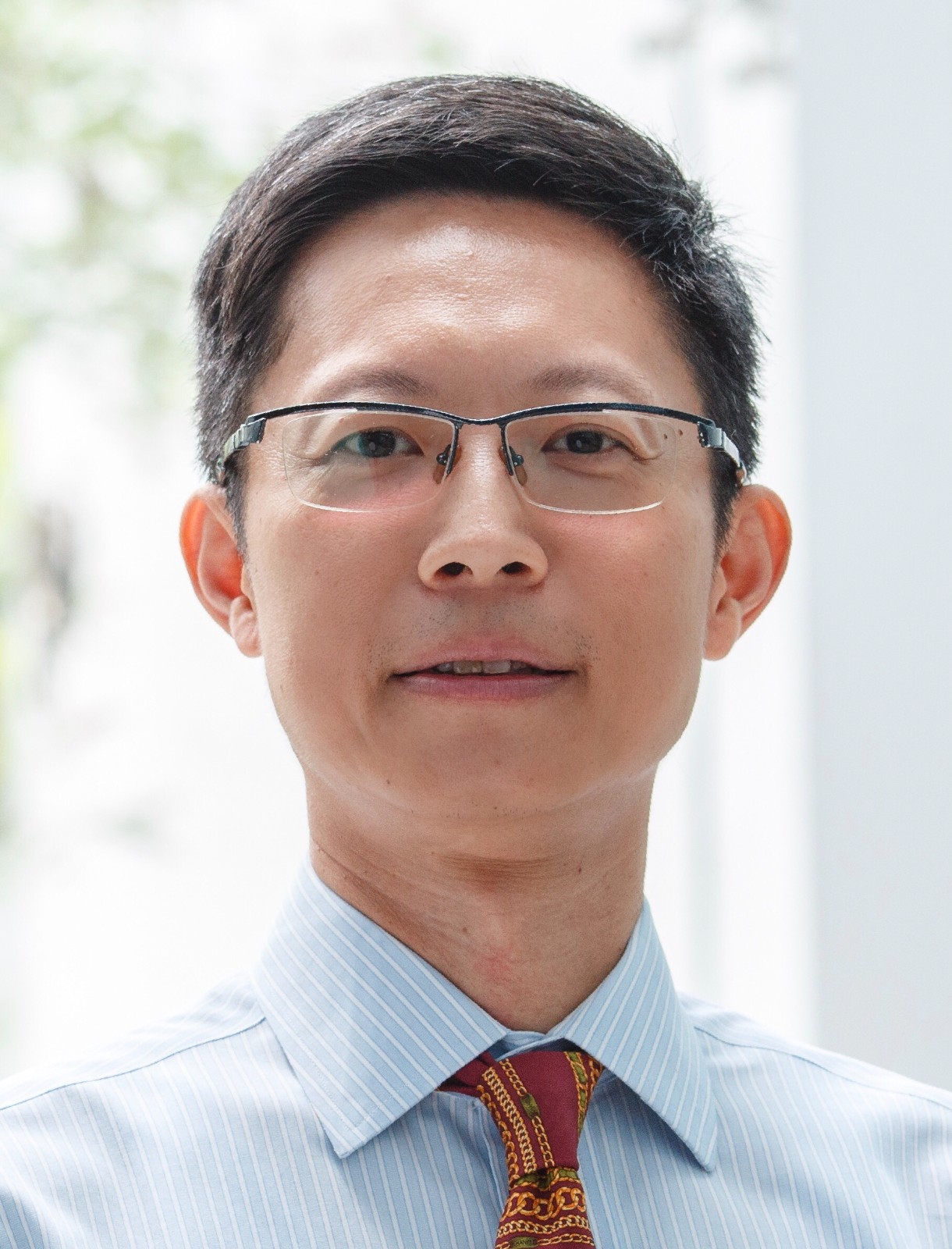
| Prof. Fugee TSUNGThe Hong Kong University of Science and Technology (Guangzhou), China Bio: Prof. Tsung is Chair Professor of the Department of Industrial Engineering and Decision Analytics (IEDA) at the Hong Kong University of Science and Technology (HKUST). He is a Fellow of the Institute of Industrial Engineers (IIE), Fellow of the American Society for Quality (ASQ), Academician of the International Academy for Quality (IAQ), Elected Member of the International Statistical Institute (ISI), and Fellow of the Hong Kong Institution of Engineers (HKIE). He received both his Ph.D. and M.Sc. in industrial and operations engineering from the University of Michigan, Ann Arbor, and his B.Sc. in mechanical engineering from National Taiwan University. He worked for Ford Motor Company as a Quality Engineer and Rockwell International R&D as a Research Engineer, and did his post-doctoral research with Chrysler Corporation. During his tenure at HKUST, he has achieved a very impressive academic record and strong international reputation. Prof. Tsung has a proven record for academic leadership. He is Editor-in-Chief of the Journal of Quality Technology (JQT). Founded in 1969, JQT is the flagship journal of the American Society for Quality, and is consistently ranked as one of the most cited journals in the areas of industrial engineering, management science, and statistics. Prof. Tsung was also the Regional Vice President (Asia) of Institute of Industrial Engineers (IIE) since 2008, and the Chair of the Service Science Section, INFORMS, where he was the Founding Vice Chair in 2007. He was the Chair of the Quality, Statistics, and Reliability (QSR) Section, INFORMS, in 2004. He is also the founding Chair of the Council of Industrial Engineering Department Heads in Greater China (CIEDHC). In addition, Prof Tsung has a strong research record in the area of quality engineering and management. He has received the Best Paper Award for the IIE Transactions two times, in 2004 and 2009, respectively. He is also the recipient of the Outstanding IIE Publication Award in 2010 - this award recognizes an outstanding publication in any IIE-sponsored or co-sponsored medium. He has acted as principal and co-principal investigator on 18 funded research by the Research Grant Council (RGC). He has been invited to provide 40+ invited lectures/seminars at different academic institutions and international conferences, and has served or is serving editorial positions for 14 internationally respected journals. He serves as Department Editor of IIE Transactions, Associate Editor of Technometrics, Naval Research Logistics, and Journal of Quality Technology (JQT). He has authored over 100 refereed journal publications in Technometrics, Management Science, JQT, IIE Transactions, IEEE Transactions, Journal of the American Statistical Association (JASA), Annals of Statistics, Annals of Operations Research, etc. He has successfully directed and been directing 17 PhD theses and 12 Master theses in a variety of industrial engineering related topics |
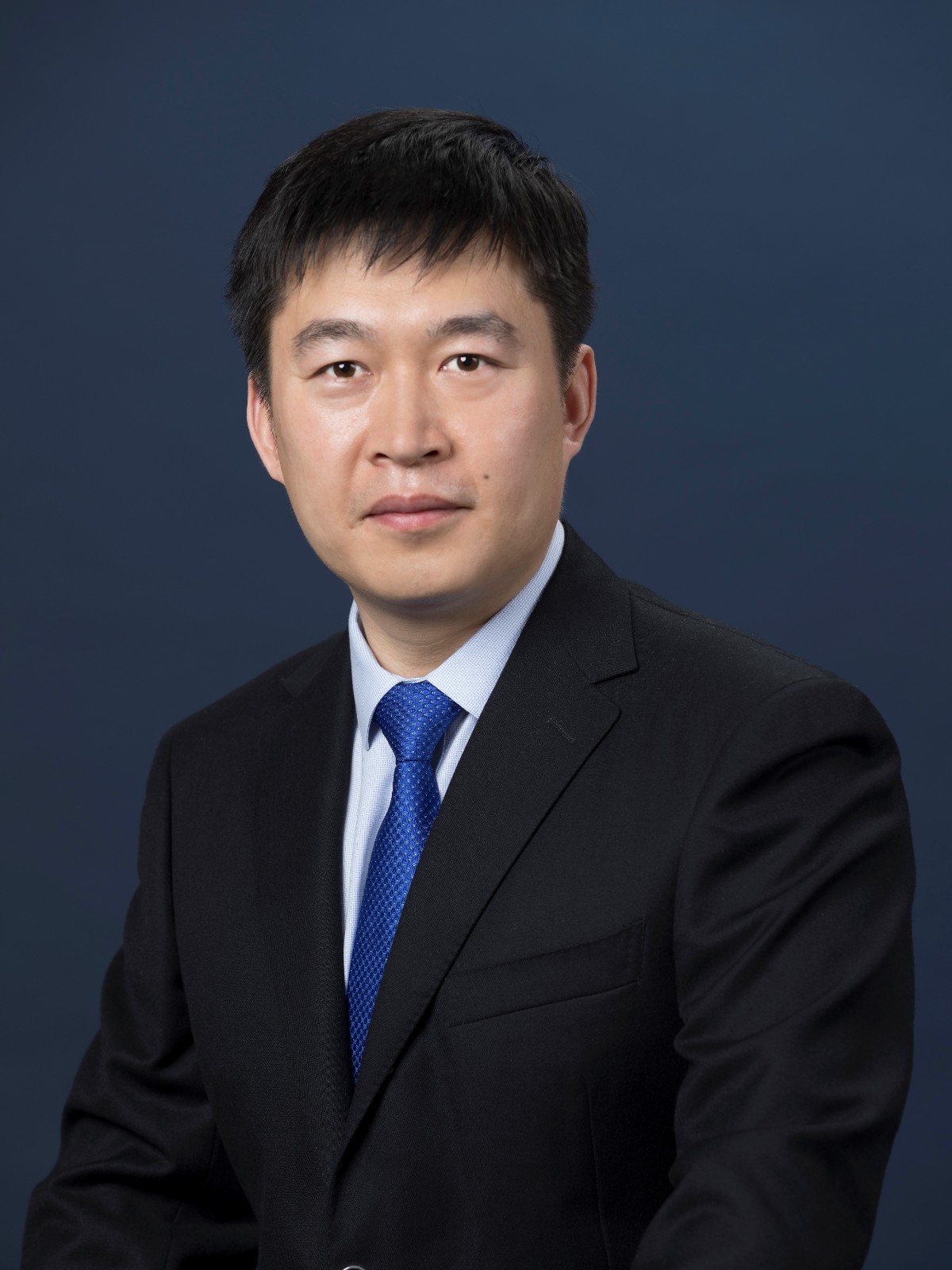
| Researcher Zhengtao ZhangInstitute of Automation, Chinese Academy of Sciences, CASIA, China Bio: Dr. Zhengtao Zhang is a Distinguished Core Researcher and Doctoral Supervisor at the Chinese Academy of Sciences (CAS). He is recognized as a "Top Talent" by the Organization Department of the CPC Central Committee and currently serves as the Director of the Engineering Laboratory of Industrial Visual Intelligent Equipment at CAS. He is the Chair of the Intelligent Manufacturing Systems and Technologies Committee of the Chinese Association of Automation, a member of the Expert Advisory Committee on Intelligent Inspection Equipment of the Ministry of Industry and Information Technology, a Professor by Appointment at the University of Chinese Academy of Sciences, and a member of the CAS Youth Federation. Additionally, he is a recipient of the Luoyang Science and Technology Leading Talent award and the Outstanding Entrepreneur award of Luoyang City. Dr. Zhang has long been engaged in research on industrial visual inspection, computer vision, and intelligent robotic systems. He has published more than 60 academic papers in high-impact journals including IEEE Transactions, among which 24 are indexed by SCI. He has co-authored two academic books and holds 36 authorized invention patents. He has led or participated in more than 20 national and enterprise-funded projects, including those supported by the National Natural Science Foundation of China, the Innovation Research Group Program of the National Natural Science Foundation, the Key Research and Development Program, and major defense projects. Dr. Zhang’s work has been recognized with numerous awards, including the 2022 CAS Science and Technology Promotion Award (First Prize, ranked first), the First Prize of the 2023 Chinese Society of Image and Graphics Science and Technology Progress Award for “Key Technologies and Applications of Robust Machine Vision Perception in Complex Industrial Scenarios,” two Beijing Science and Technology Progress Awards in 2013 and 2015, as well as support from the Henan Province “Heluo Talent Program” and the CAS Youth Innovation Talent Program. |
| Prof. Bo TaoHuazhong University of Science and Technology, China Bio: Prof. Bo Tao (born March 1977) is a male doctoral supervisor and professor, recognized as a national-level leading talent. He currently serves as the Executive Secretary-General of the Robotics Branch of the Chinese Mechanical Engineering Society and Secretary-General of the Collaborative Robotics Committee of the Chinese Association of Automation. He was selected for the Ministry of Education's first batch of National Young Talents, the Ministry’s New Century Excellent Talents Program, and was a nominee for the National Excellent Doctoral Dissertation Award. Prof. Tao received his Ph.D. in Mechanical Engineering from Huazhong University of Science and Technology in 2007. He completed his postdoctoral fellowship at the same institution in July 2009 and continued teaching thereafter. He was promoted to Associate Professor in November 2009, appointed as a doctoral supervisor in 2011 through an exceptional selection process, and was elevated to Full Professor in 2013 ahead of the typical schedule. From June 2013 to June 2014, he conducted research as a visiting scholar at the University of California, Berkeley. Prof. Tao has led five National Natural Science Foundation of China (NSFC) projects, including major research plan integration projects and key fund projects, as well as national-level research projects such as the National Key R&D Program on Intelligent Robots, National Major Project, and National 973 Program. He has published more than 60 papers indexed by SCI/EI in domestic and international academic journals, and has been invited to contribute to two English-language monographs. Prof. Tao has received the Second Prize of the National Science and Technology Progress Award, the Second Prize of the National Technological Invention Award, and the First Prize of the National Teaching Achievement Award, and holds over 30 authorized national invention patents. |
| Prof. Qiang LiuGuangdong University of Technology, China Bio: Dr. Qiang Liu, Professor and Doctoral Supervisor, is the Dean of the School of Mechatronic Engineering. He is recognized as a Leading Talent in Scientific and Technological Innovation under the National Special Support Program. He serves as the Deputy Director of the State Key Laboratory of Precision Electronic Manufacturing Technology and Equipment, a joint initiative by the Ministry and Province, and is the Director of the Guangdong Key Laboratory of Computer Integrated Manufacturing. Dr. Liu has long been engaged in research on intelligent manufacturing technologies and digital twin technologies. He has led one National Key R&D Program project, one Guangdong Provincial Key R&D project, and more than 20 projects funded by the National Natural Science Foundation of China |
| Director Wenjie ChenMidea Blue Orange Laboratory, China Bio: Dr. Wenjie Chen, a Ph.D. from the University of California, Berkeley, is a leading expert of the Pearl River Talent Program in Guangdong Province. He currently serves as the Executive Deputy Director of the National Key Laboratory for High-End Heavy-Duty Robotics (Midea Blue Orange Laboratory) and the Director of the Robotics Research Institute at Midea Group, overseeing the Group's strategic planning and exploration in robotics and automation technologies. Dr. Chen has held prestigious positions including Senior Researcher at FANUC Corporation's Robotics Research Institute in Japan, Industry Professor at Southern University of Science and Technology, and Adjunct Professor at the Zhejiang University-UIUC Joint Institute. With extensive research experience in robotics, automatic control, and mechatronics, he has led or participated in dozens of cutting-edge research and application development projects across China, the United States, and Japan. His academic contributions include over 60 publications in international core journals and high-level conference papers, more than 50 authorized invention patents in China, the United States, Japan, and Germany, two gold medals at the Geneva International Exhibition of Inventions, and six national association awards for scientific and technological achievements. Dr. Chen has played a pivotal role in formulating two national standards and two industry/group standards. He serves on the editorial boards of several international academic journals and conferences, including IJARS, DSCC, and ACC, and is an expert in guideline formulation and evaluation for national key R&D programs. |